

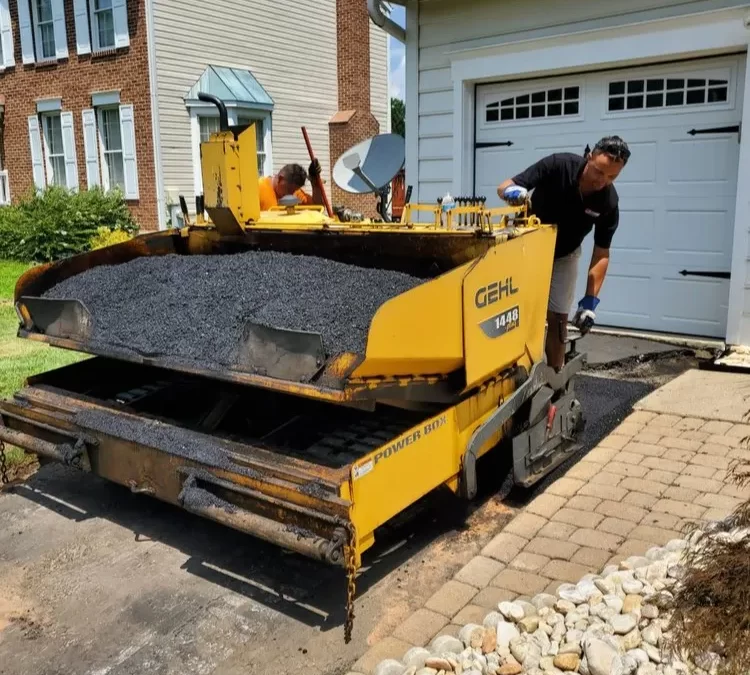
Getting a new driveway or parking lot paved is a significant investment. The difference between a job that lasts 20 years and one that starts cracking before winter arrives often comes down to one thing: the company you hired. Here is how to spot trouble before, during, and after the job.
The Most Common Mistake Bad Asphalt Companies Make
Skipping proper base preparation is the single most widespread mistake in low-quality asphalt work. Everything that happens above ground depends on what happens below it. If the base is weak, unstable, or not properly compacted, the asphalt layer will shift, crack, and fail no matter how thick or fresh it looks on day one.
A professional crew spends real time on grading, ensuring proper drainage slopes, and compacting the sub-base before a single ton of hot mix is laid. When a company rushes past this step to save time and labor costs, the customer almost never notices in the moment. They notice six months later when the surface starts rutting or water begins pooling in the wrong places.
Red Flags During the Estimate Process
Problems often reveal themselves before any equipment shows up. Pay attention to how a contractor handles the estimate. These are the warning signs worth taking seriously:
- They give you a price over the phone without visiting the site in person.
- The quote arrives with no written breakdown of materials, thickness, or prep work included.
- They pressure you to sign the same day, citing “limited availability” or a price that expires immediately.
- They cannot provide local references from completed jobs in the Charlotte area.
- The bid is dramatically lower than all the others you received, with no explanation for the difference.
- They ask for a large cash deposit upfront, sometimes the full job cost
According to the National Institute of Standards and Technology, pavement installed without adequate compaction can lose up to 40% of its service life before the surface shows any visible signs of distress. Poor workmanship hides well in the short term.
Source: NIST Pavement Research Program — nist.gov
Red Flags That Show Up During the Actual Paving Job
Once work begins, you have a real window to observe quality. You do not need to be a paving expert to notice these issues on your own property:
Watch the prep work closely
- The crew skips saw-cutting old edges cleanly before tying in new asphalt.
- No tack coat (a bonding adhesive layer) is applied between the base and the new surface.
- The sub-base looks thin, inconsistent, or visibly soft in certain spots.
- Workers are not checking grade or slope at any point during prep.
Watch the paving itself
- The crew is using hand tools for most of the compaction instead of a proper roller.
- The asphalt appears to be cooling too quickly before being compacted, which means it was hauled from too far away.
- Edges look ragged or uneven rather than clean and straight.
- The job moves unusually fast, with no attention paid to transitions or drainage areas.
Shortcuts Customers Usually Never Notice Right Away
Some of the most damaging cost-cutting decisions are invisible on day one. These are the ones that show up a season or two later when the warranty conversation has gone cold:
- Thin asphalt layers. Residential driveways typically need at least 2 to 3 inches of compacted asphalt. Some contractors lay 1 to 1.5 inches and call it done.
- Recycled or inferior mix. Low-grade or improperly proportioned asphalt mix breaks down faster, especially under Charlotte’s temperature swings.
- No edge support. Without compacted shoulders or proper edging, the sides of a driveway crumble within a year or two.
- Ignoring drainage. Water that sits against or under asphalt is its biggest long-term enemy. Proper grading keeps it moving away from the surface.
- Skipping the tack coat. This adhesive layer bonds the base and new surface together. Without it, layers can separate and delaminate over time.
How Soon Do Problems Appear After a Bad Install?
The timeline depends on what went wrong, but here is a realistic picture of how poor workmanship reveals itself:
| Timeframe | What appears | Likely cause |
|---|---|---|
| Within weeks | Surface scuffing, soft spots, tire marks | Poor compaction or mix laid too cold |
| First winter/spring | Edge crumbling, small cracks forming | No edge support, thin asphalt layer |
| 6 to 18 months | Water pooling, surface cracking, depressions | Bad grading, inadequate base, no tack coat |
| 2 to 3 years | Potholes, full edge breakdown, surface delamination | Multiple compounding installation failures |
| 3 to 5 years | Full resurfacing or replacement required | Poor base prep from the start |
What Customers Who Hired the Wrong Company Say Most Often
These are the complaints heard again and again from homeowners and property managers who came to get a second opinion or repair work done after a previous contractor let them down:
- “It started cracking after the first winter.”
- “The edges are already falling apart and it was just paved last year.”
- “Water pools in the middle every time it rains.”
- “I cannot reach them anymore. The number goes to voicemail.”
- “They were the cheapest bid and now I understand why.”
- “No one ever came back to seal it like they said they would.”
Pattern worth noting
The pattern in these complaints is nearly always the same: the job looked fine at first, the company was hard to reach afterward, and the problems started appearing within one to two seasons. A low price with no follow-through almost always ends up costing more in repairs than a properly priced job done right the first time.
The Long-Term Damage Poor Installation Can Cause
Failed asphalt is not just an eyesore. The structural consequences compound over time and affect more than just the surface:
- Water infiltration through cracks reaches the sub-base, weakening the ground beneath and accelerating further settling.
- Potholes develop vehicle damage liability on commercial properties.
- Foundation areas near poorly graded driveways can experience water damage if drainage was not handled correctly.
- Full replacement costs significantly more than a properly installed job would have cost upfront.
- Property value and curb appeal take a visible hit when pavement deteriorates prematurely.
What a Professional Asphalt Company Always Does During Installation
A quality installation follows a consistent, non-negotiable sequence of steps. This is what the process looks like when it is done right:
- Site assessment and measurements completed in person before any quote is provided.
- Existing surface removed cleanly, with attention to transitions and tie-in areas.
- Sub-base graded and compacted to the proper depth and slope for drainage.
- Tack coat applied to all surfaces receiving new asphalt.
- Hot mix asphalt delivered from a nearby plant and laid promptly to maintain proper temperature.
- Mechanical roller compaction completed in multiple passes.
- Edges finished cleanly and supported properly.
- Final slope check to confirm water runs away from structures and off the surface correctly.
Equipment and Materials That Separate a Professional from a Cheap Crew
The tools a contractor arrives with tell you a lot about the quality they are capable of delivering.
| Item | Professional standard | Red flag |
|---|---|---|
| Compaction equipment | Mechanical drum roller | Hand tamper only |
| Asphalt mix source | Local certified plant, same-day delivery | Unknown source, reheated or recycled scraps |
| Mix temperature | Checked on arrival, 275-325°F | Not monitored, placed cold |
| Paving machine | Asphalt paver for larger jobs | Shovels and rakes only |
| Base material | Crushed stone, properly graded | Existing unstable material reused |
How to Verify You Are Hiring a Legitimate Local Company
Before signing anything, a few straightforward checks will save a lot of grief:
- Ask for a physical local address, not just a phone number or a P.O. box.
- Request proof of general liability insurance and verify it is current.
- Check Google reviews, the Better Business Bureau, and Angi for recent local feedback.
- Ask for two or three completed job addresses nearby that you can drive by and inspect.
- Confirm the company has been operating under the same name in the Charlotte area for a meaningful period of time.
- Get everything in writing: scope of work, materials, thickness, timeline, and warranty terms.
What Fixing Another Contractor’s Bad Work Actually Looks Like
Repair work after a failed installation is unfortunately a regular part of the job. A typical scenario: a property owner calls after noticing significant cracking and edge deterioration just 18 months after having a driveway repaved. On inspection, the asphalt layer measures barely an inch thick in most areas, the edges have no structural support, and there is visible separation between the new surface and the base beneath it, a clear sign no tack coat was used.
The repair requires removing the failed surface, re-grading and compacting the base properly, applying tack coat, and laying a correct-depth asphalt layer. The total cost to the homeowner ends up being significantly more than a proper installation would have cost the first time, and that does not account for what they paid the original contractor.
These situations are not rare. They happen every season, and the root cause is almost always the same: a low bid that cut corners on prep and materials.
How to Compare Multiple Asphalt Bids Without Getting Burned
Getting multiple quotes is smart. The key is knowing what you are actually comparing. Here is how to look at bids side by side in a way that actually tells you something:
- Make sure every bid specifies the same scope: same area, same asphalt depth, same prep work included.
- Ask each contractor to specify the thickness of the asphalt layer they are quoting.
- Find out where the asphalt mix is coming from and confirm it is a local certified plant.
- Ask what compaction equipment they will bring on site.
- Clarify what warranty they offer and what it actually covers.
- A bid that is 30 to 40 percent lower than the others is not a deal. It is a signal that something is being left out.
Practical guidance
The right question is not “who is the cheapest?” but rather “which company is giving me the most accurate picture of what this job actually requires?” The contractor who explains the most and asks the most questions about your specific property is usually the one who plans to do it properly.
Armor Asphalt Serves Charlotte the Right Way
If you are comparing bids on a driveway or parking lot project in the Charlotte area, Armor Asphalt is here to give you a straight answer. We show up to every estimate in person, provide a detailed written quote, use certified local materials, and stand behind our work. We have built our reputation in this market by doing the job correctly the first time, and we are happy to show you completed projects nearby so you can see the quality for yourself.
Do not let a low bid turn into a costly repair project. Get in touch with Armor Asphalt today for an honest, no-pressure estimate.